Farne Islands: Puffins, Boardwalks, and a Very Wobbly Boat
Most National Trust visits begin with a car park, a café, a house, a garden, or a long-ish walk through a familiar kind of English countryside. The Farne Islands begin very differently: with a boat.
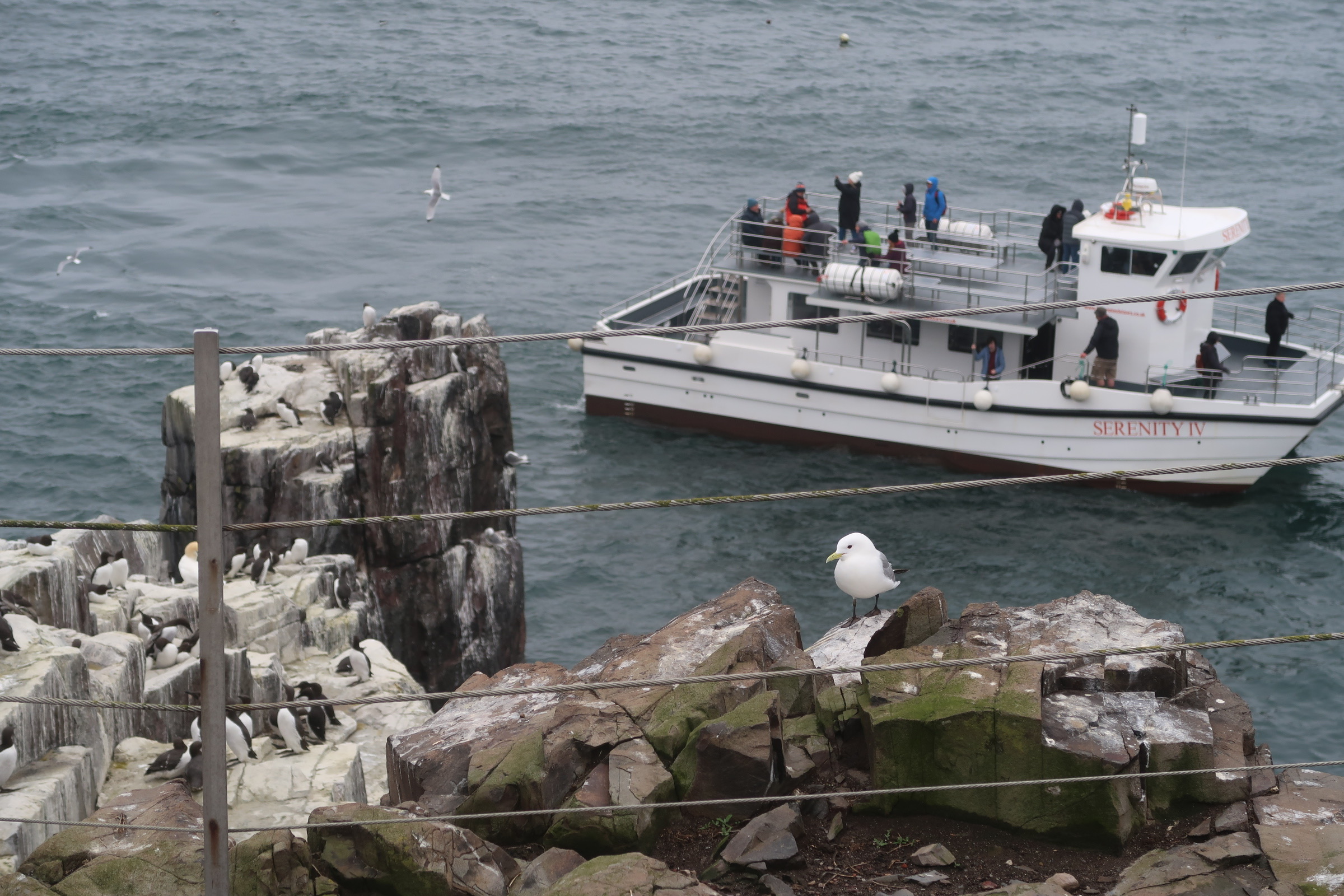
And not a calm, postcard-blue, cinematic boat either. For me, it was a very wobbly boat, on one of those strange early May bank holiday days when spring briefly forgets itself. The days around it had been sunny and soft, but this one was windy, rainy, grey, and determinedly gloomy. The sea was choppy enough that the journey felt less like a gentle wildlife cruise and more like being reminded, repeatedly, that islands are not meant to be reached too easily.

That already made the Farne Islands feel unlike any other National Trust site I have visited. It is not a place you simply arrive at. You cross over to it. You wait for the boat. You watch the mainland shrink behind you. You scan the water and the rocks for seals and birds. Then, eventually, Inner Farne appears not as a grand estate or ruin, but as a low, exposed, living island in the North Sea.
The landing itself felt exciting because it was so constrained. Once on Inner Farne, visitors are asked to stay on the paved paths, boardwalks, and marked routes. At first this sounds restrictive, but once you understand why, it becomes part of the experience. This is not a landscape arranged around humans. It is a breeding island, and we are the temporary, slightly clumsy visitors passing through it.
And then there were puffins.
Before going, I had not read too many guides or planned the visit in detail. I knew puffins were associated with the Farne Islands, but I did not know how many I might realistically see, or how difficult they would be to spot. I think I went with a whale-watching mindset: maybe we would see one, maybe we would not, and if we did, it would feel like a small miracle.
But there were so many!
Not in an overwhelming, zoo-like way, but in a way that made the island feel secretly busy. A puffin would appear near a burrow, then another would skim low over the grass, then another would stand almost comically still with its bright beak and serious little body. Some were close enough that I had to remind myself not to rush, not to lean too far, not to behave like a person who had suddenly forgotten all dignity because of a bird.
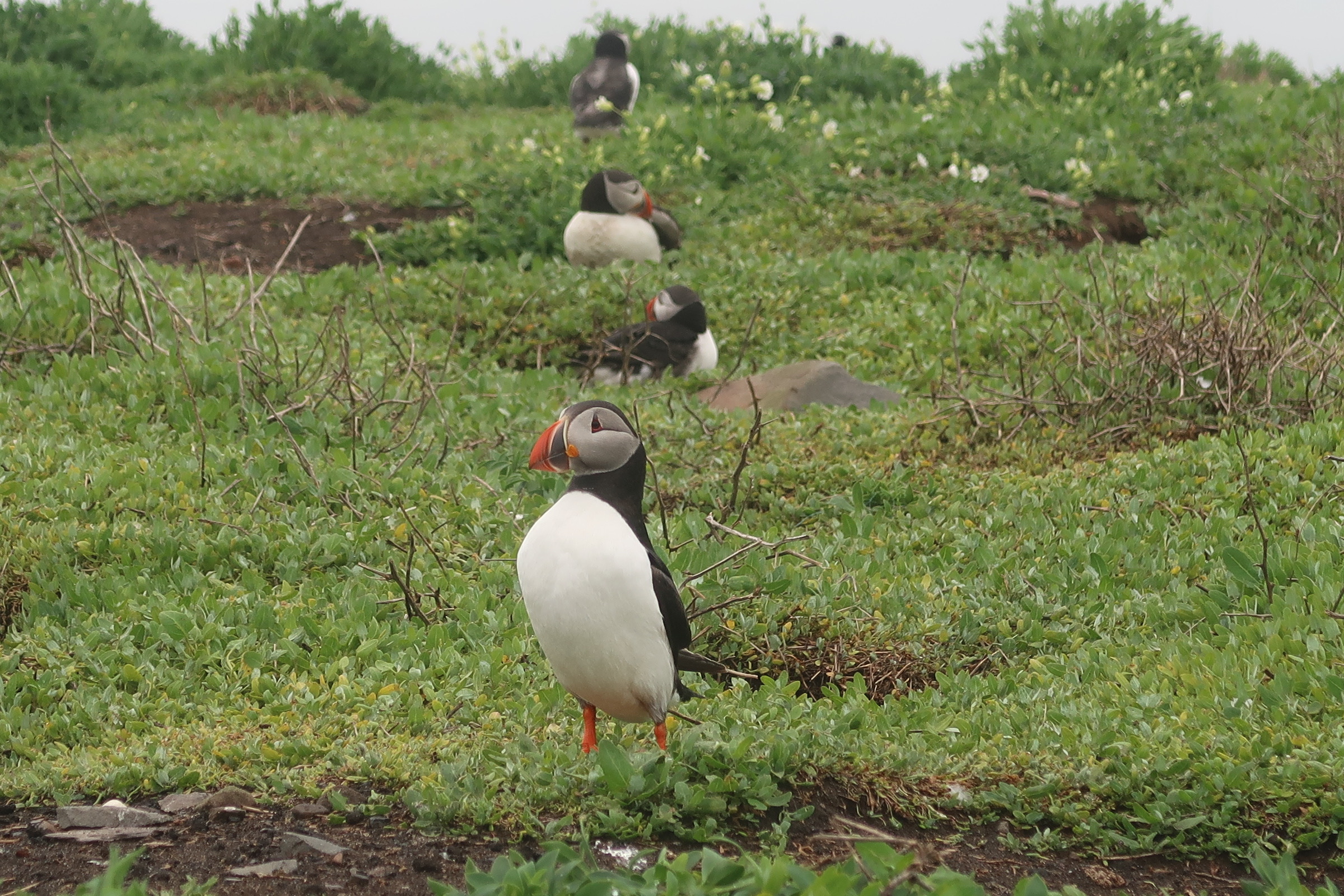
They are such strange and perfect creatures. From a distance, they look like tiny black-and-white punctuation marks scattered across the island. Up close, they are even better: neat orange feet, painted-looking faces, and a slightly solemn expression that makes them seem both adorable and deeply busy. They do not look like they are performing for visitors. They look like they have important puffin admin to complete.

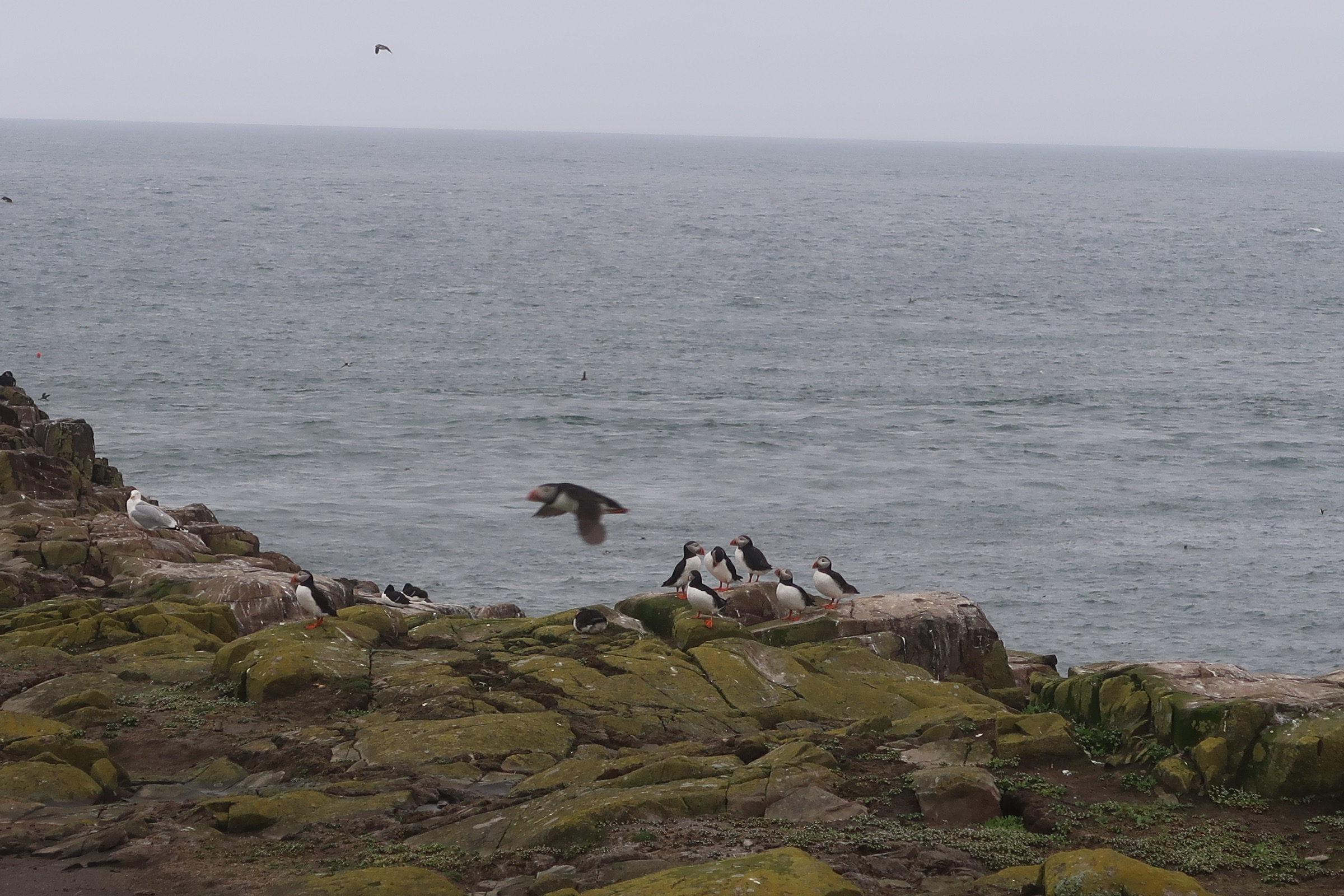
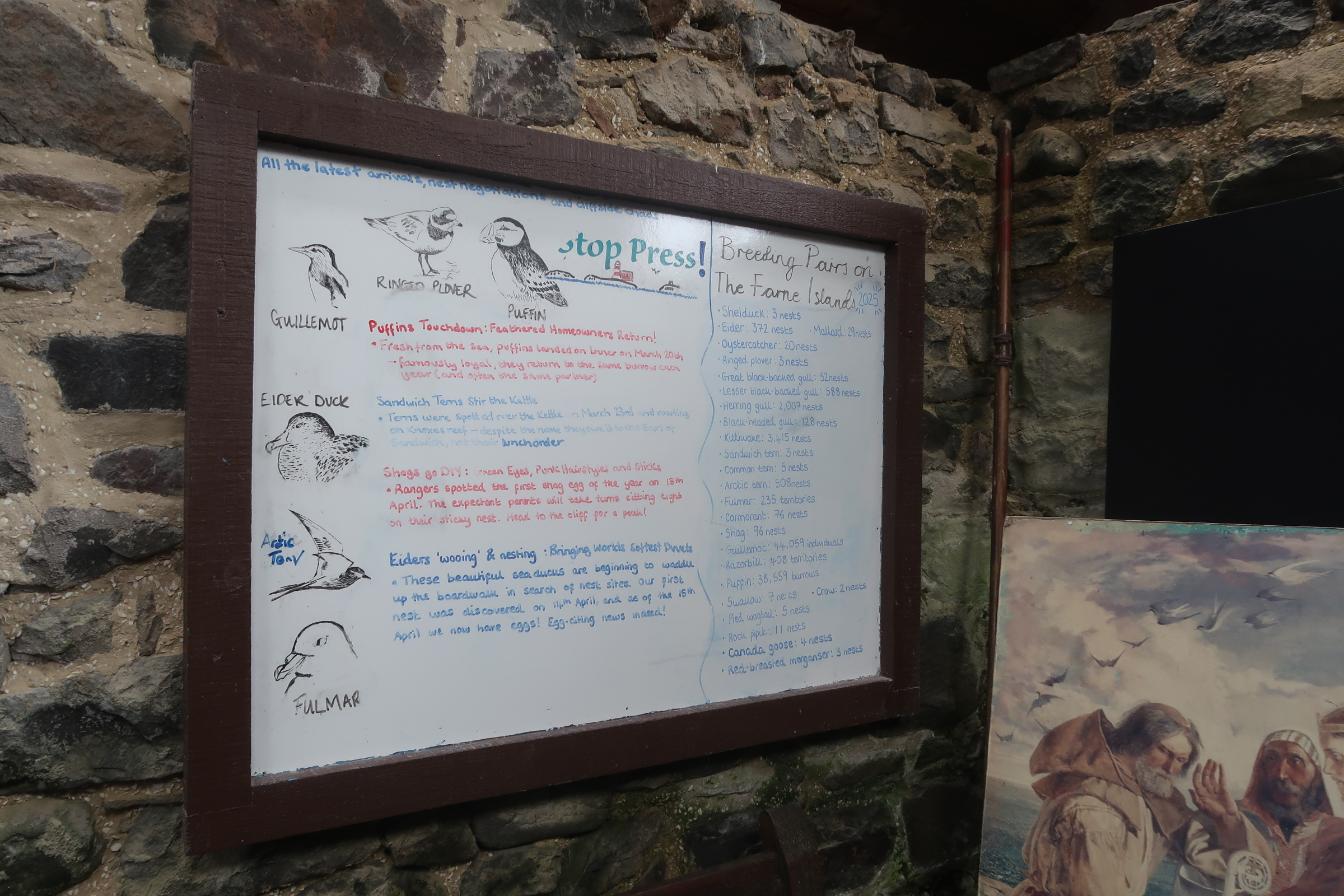
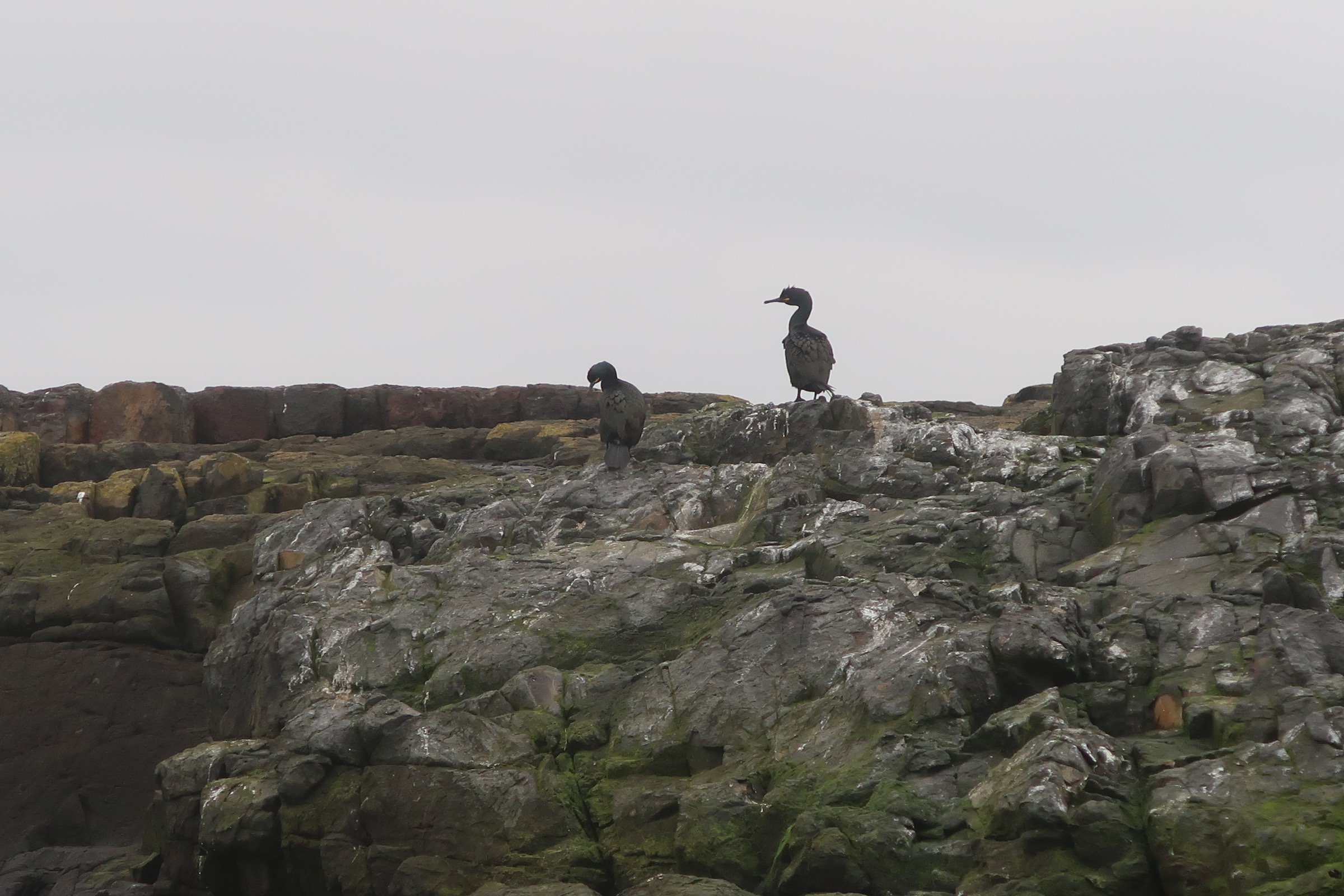
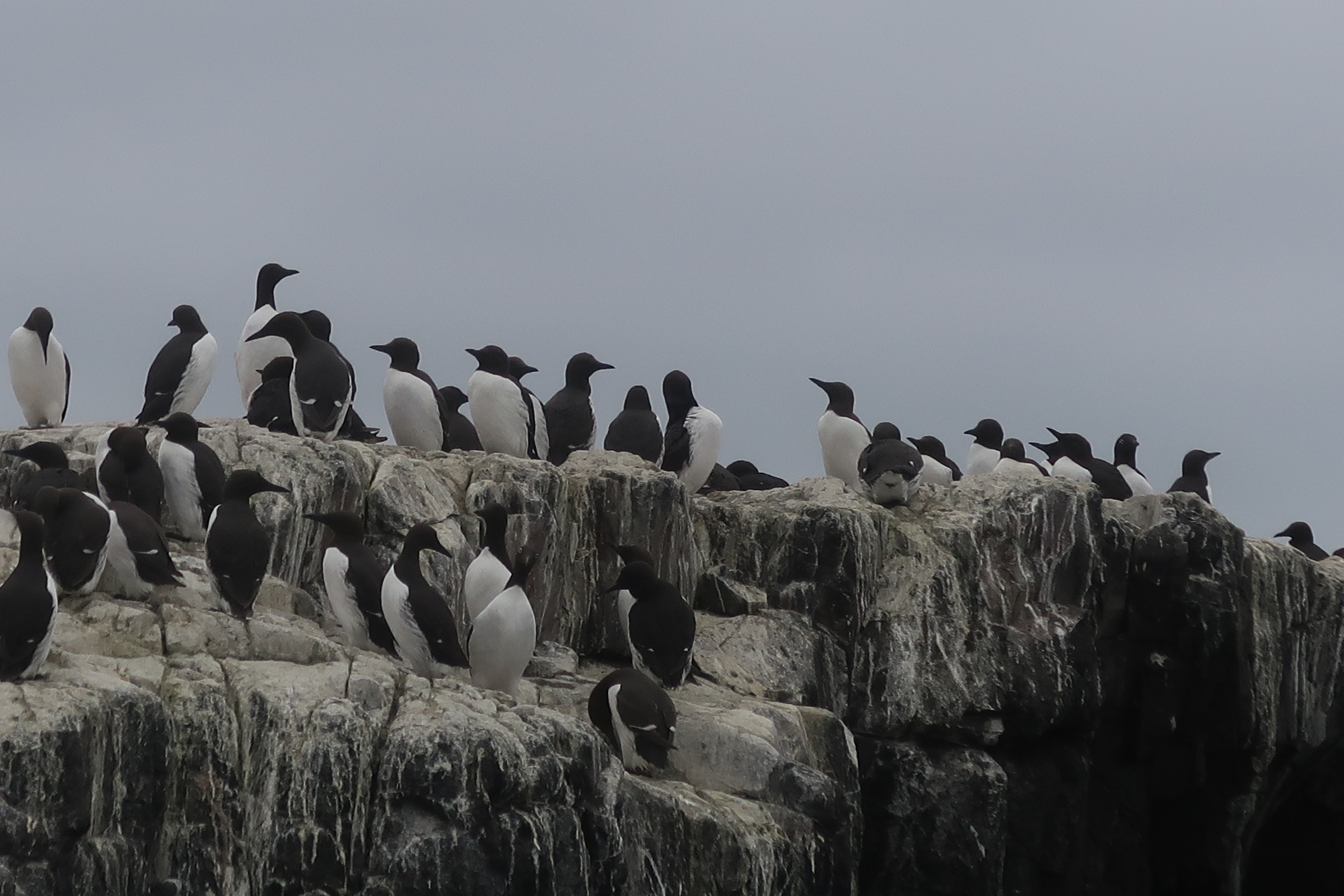
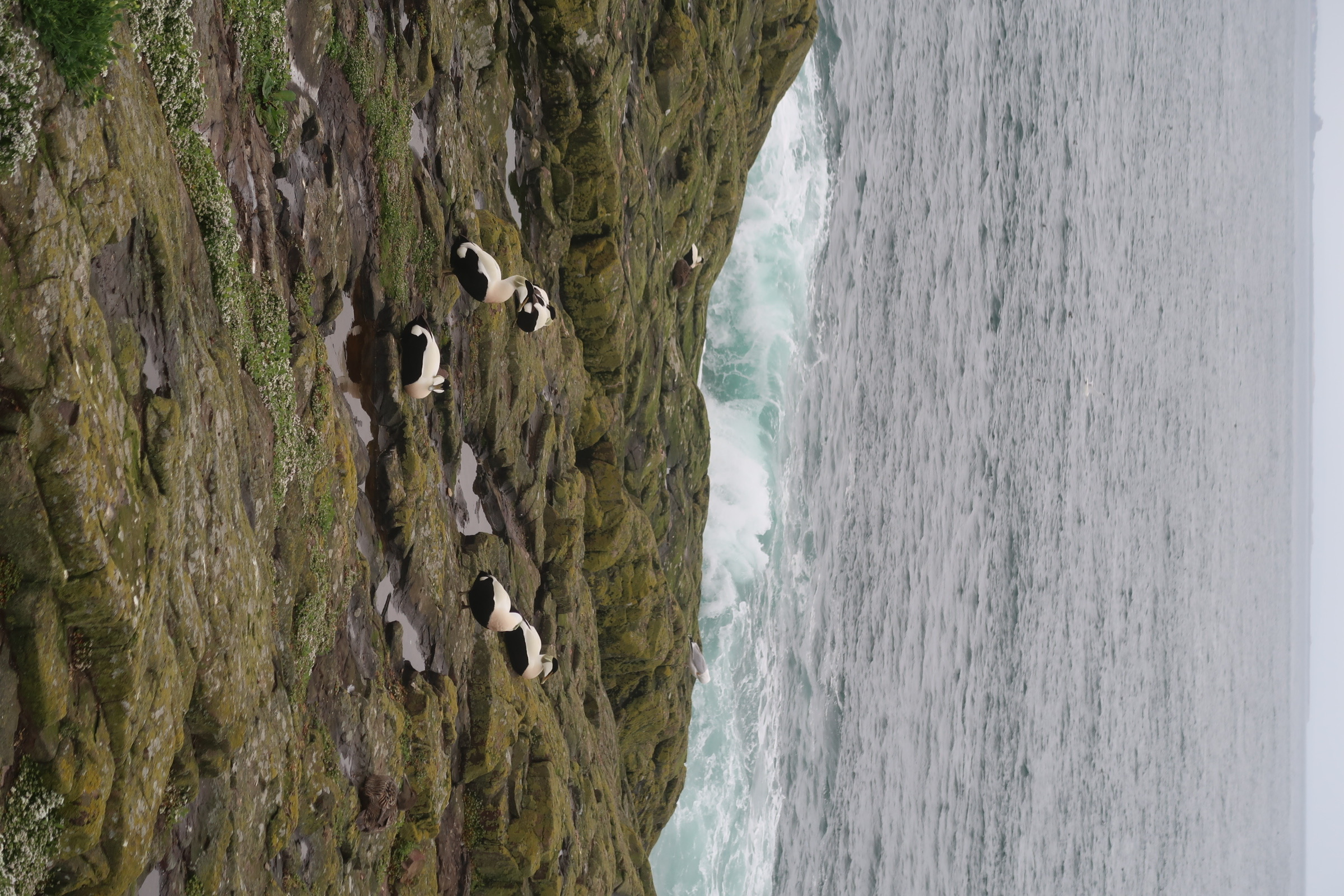
The most exciting moments were often the smallest ones: spotting a puffin just before it disappeared into a burrow; seeing one fly in low and fast; noticing how quickly the air above the island could become full of movement. There were other seabirds too — guillemots, terns, gulls, and birds I still need to properly identify from my photos — but the puffins were the emotional centre of the visit for me.
I think part of the joy was the mismatch between expectation and reality. I expected the possibility of puffins. I did not expect abundance. I expected to spend time searching. Instead, I kept seeing them. Every few steps, there was another little moment of delight.
The weather also, weirdly, helped. A sunny day would have made everything prettier, but the grey, wet, windy conditions made the island feel more real. The North Sea was not just a background. It was present in the movement of the boat, in the cold air, in the dampness on camera lenses, in the way everyone seemed slightly wind-blown and alert. The Farne Islands did not feel like a polished day trip. They felt wild, exposed, and alive.
That is what made this National Trust visit so memorable. It was not about a house, an interior, a garden design, or a carefully preserved human history. It was about being allowed, briefly and carefully, into a place where birds are the main residents. The paths are there so we do not damage what we came to see. The restrictions are not an inconvenience; they are the whole point.
By the time we got back on the boat, I felt cold, damp, and extremely happy. The kind of happy that comes from seeing something much better than expected, and from feeling that a place has shown you a version of itself that cannot be replicated elsewhere. Inner Farne is small, but the experience did not feel small at all.
It felt like one of the most unusual and interesting National Trust places I have visited: a little island of puffins, boardwalks, wind, rain, and a boat ride I will not forget too quickly.
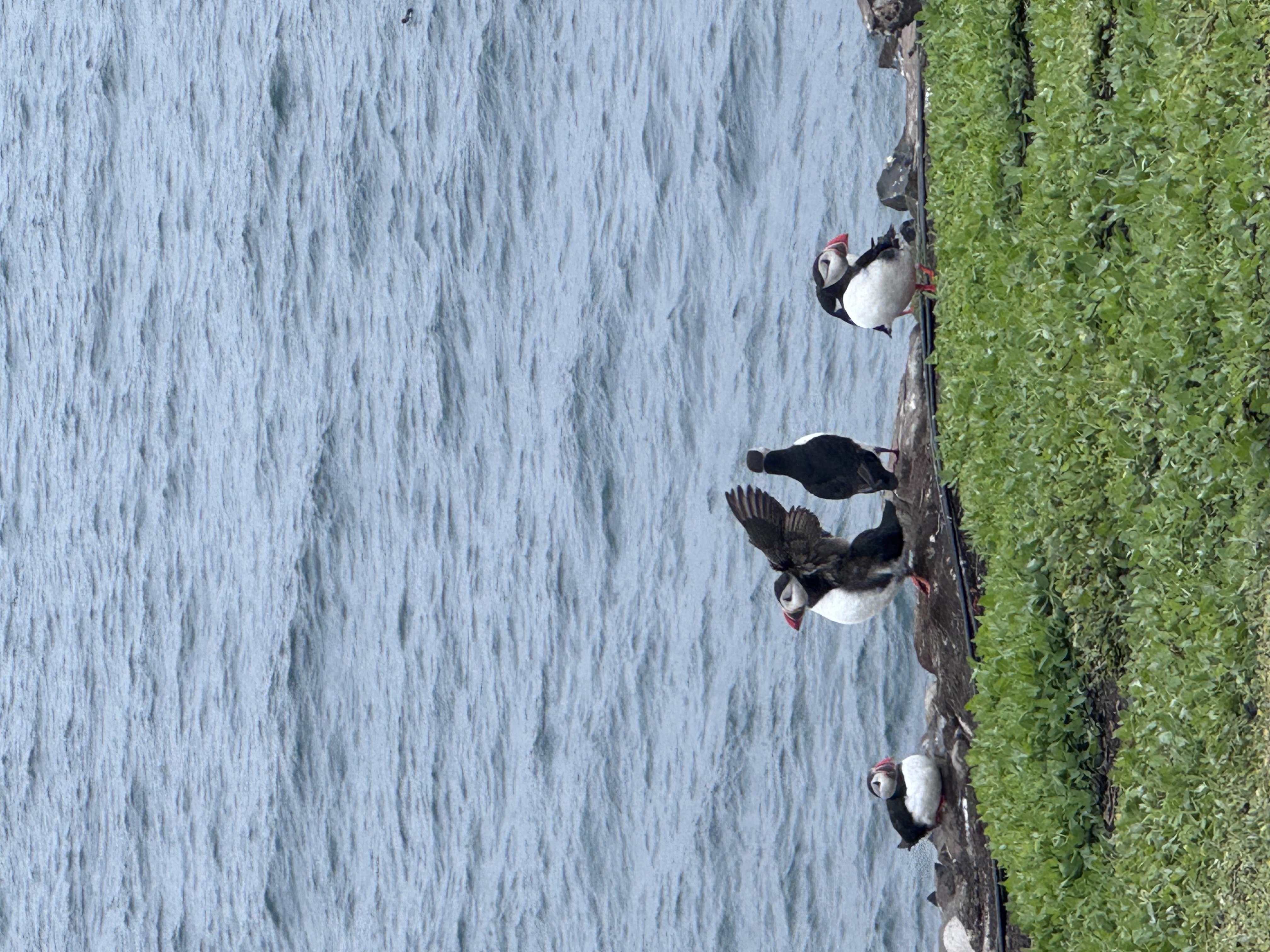
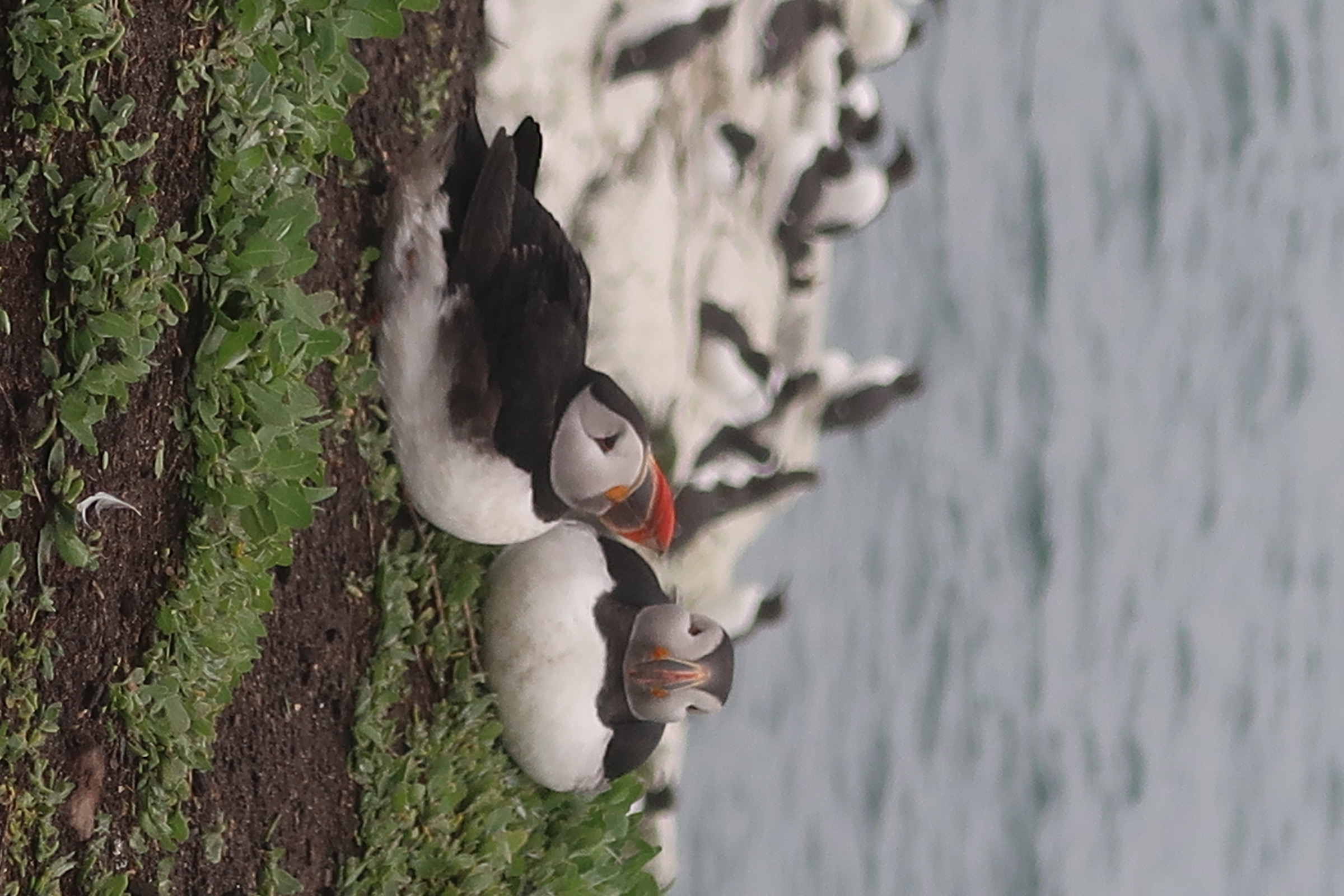
Puffin gallery
I took far too many puffin photos, which is probably the correct number of puffin photos to take.
Enjoy Reading This Article?
Here are some more articles you might like to read next: