Beatrix Potter and the National Trust
Some National Trust visits feel connected even when they are hundreds of miles apart.
Melford Hall in Suffolk and Hill Top in the Lake District are both linked by Beatrix Potter. They are very different houses. Melford Hall is a grand, red-brick Suffolk mansion with family history, formal rooms, and long domestic continuity. Hill Top is a small Lakeland farmhouse, intimate and almost storybook-like from the moment it appears behind the garden gate.
But both places reveal something about Beatrix Potter beyond the familiar image of Peter Rabbit: not only the children’s author and illustrator, but also the observer, visitor, collector, farmer, and conservationist.
Melford Hall
Melford Hall was not Beatrix Potter’s own house, but it holds a surprisingly personal connection to her. She visited the Hyde Parker family there many times, and the house preserves traces of those visits: sketches, drawings, and small domestic details that link her not only to her published books, but also to family life, friendship, and close observation.
The Beatrix Potter connection in Melford Hall feels more like finding her in the margins of another family’s house: in visitor books, in drawings tucked into books, in rooms that preserve a sense of memory, and in objects that quietly echo her artistic world.
Her work is often remembered through animals — rabbits, ducks, mice, kittens, frogs — but at Melford Hall you are reminded how much of her imagination came from looking carefully. She drew buildings, interiors, furniture, fireplaces, animals, and garden corners with the same attentiveness. The fantasy of her stories was built on very precise observation. Melford Hall helps show that her fictional world was not invented from nowhere; it grew out of real places she visited, studied, and remembered.
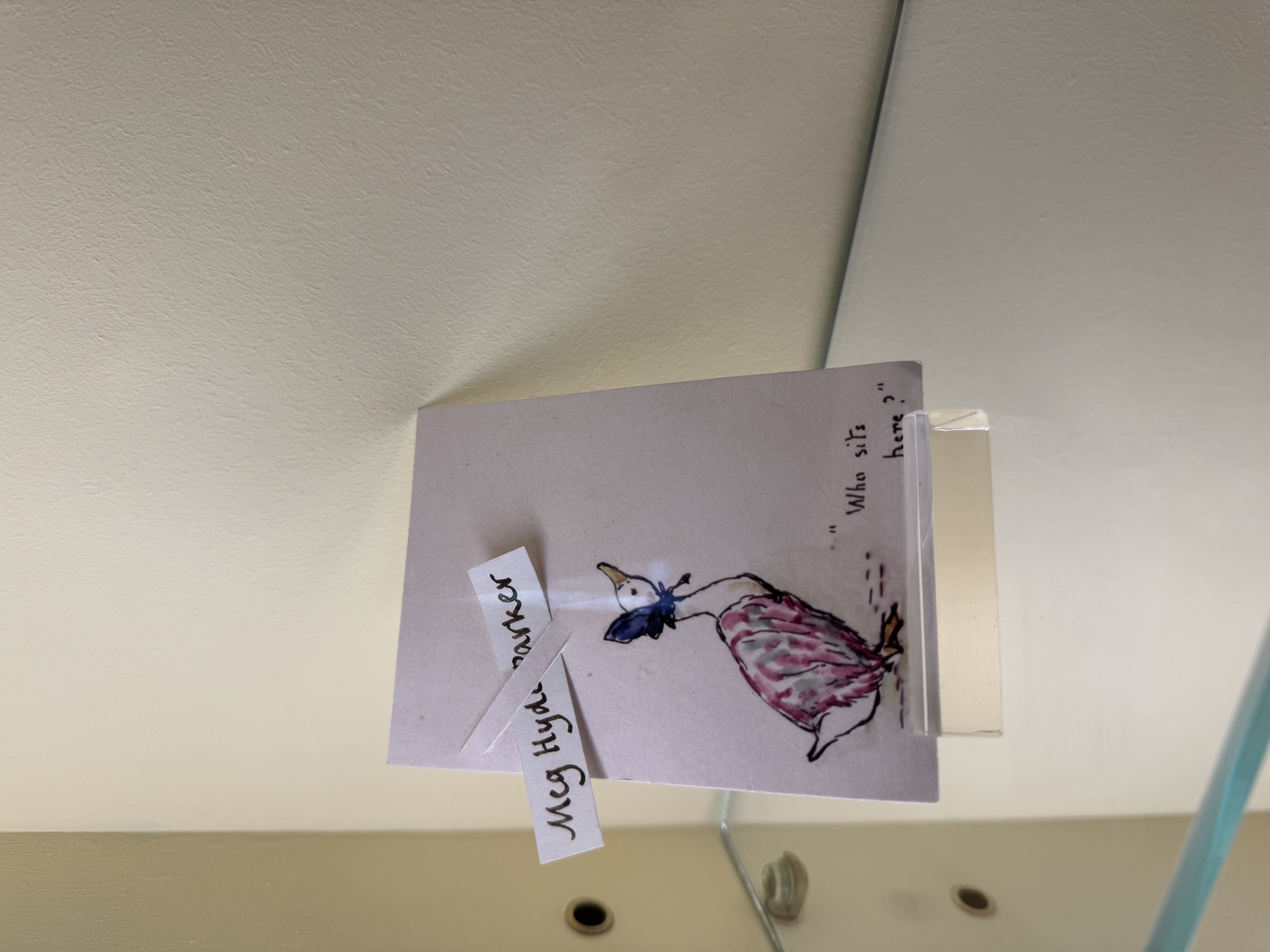
A small Beatrix Potter drawing at Melford Hall.
Hill Top
I visited Hill Top on Easter Saturday, 2025. Hill Top feels different immediately because it was hers.
Beatrix Potter bought Hill Top Farm in 1905, after the success of her early books. It became her retreat from London, but also much more than that: a working farm, a place of independence, and a landscape she repeatedly transformed into stories.
The house is small, warm, and full of things. It feels like someone has just stepped out from here for a walk. The rooms are filled with furniture, objects, and views that appear again and again in her books. Hill Top is not just where Potter lived; it is part of the visual language of her work. I would like a it more if it were less museum-like.
The garden is especially important. It has that slightly overflowing cottage-garden feeling: vegetables, flowers, paths, stone walls, and corners where it is very easy to imagine one of her characters disappearing. The world of The Tale of Tom Kitten, The Tale of Jemima Puddle-Duck, and The Tale of Samuel Whiskers feels less like fantasy here and more like a parallel version of the real farm.
What I especially liked was how directly the house and garden are tied to her stories. Around the site, small illustrated signs point out scenes that appeared in the books, making it possible to see how closely Potter worked from real life. The place is not just associated with her imagination — it is part of its source. Potter’s illustrations are not simply “cute”. They are architectural and domestic. Her animals wear clothes and behave like people, but they live in recognisable rooms, kitchens, cupboards, lanes, ponds, gardens, and farmyards.
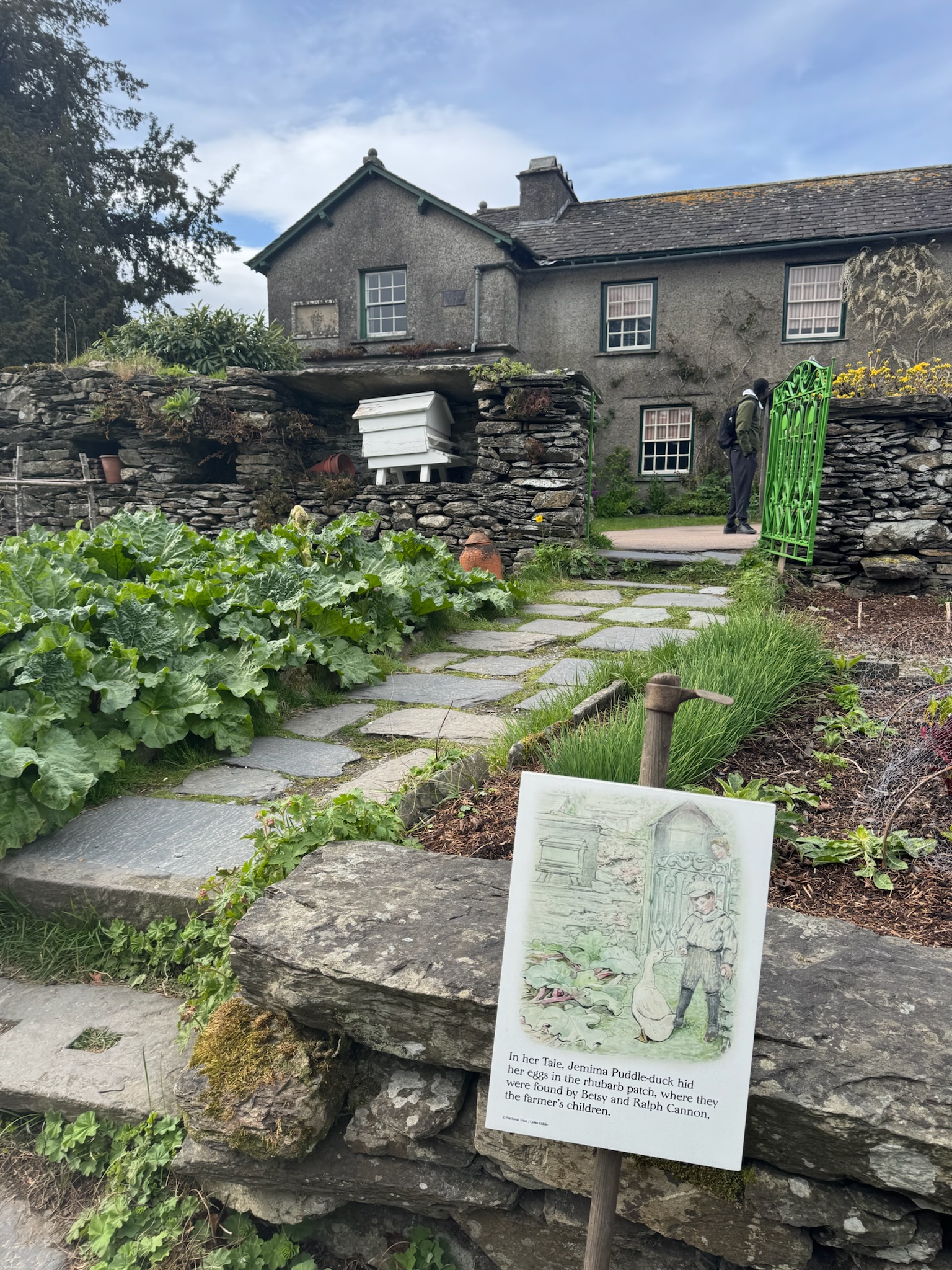
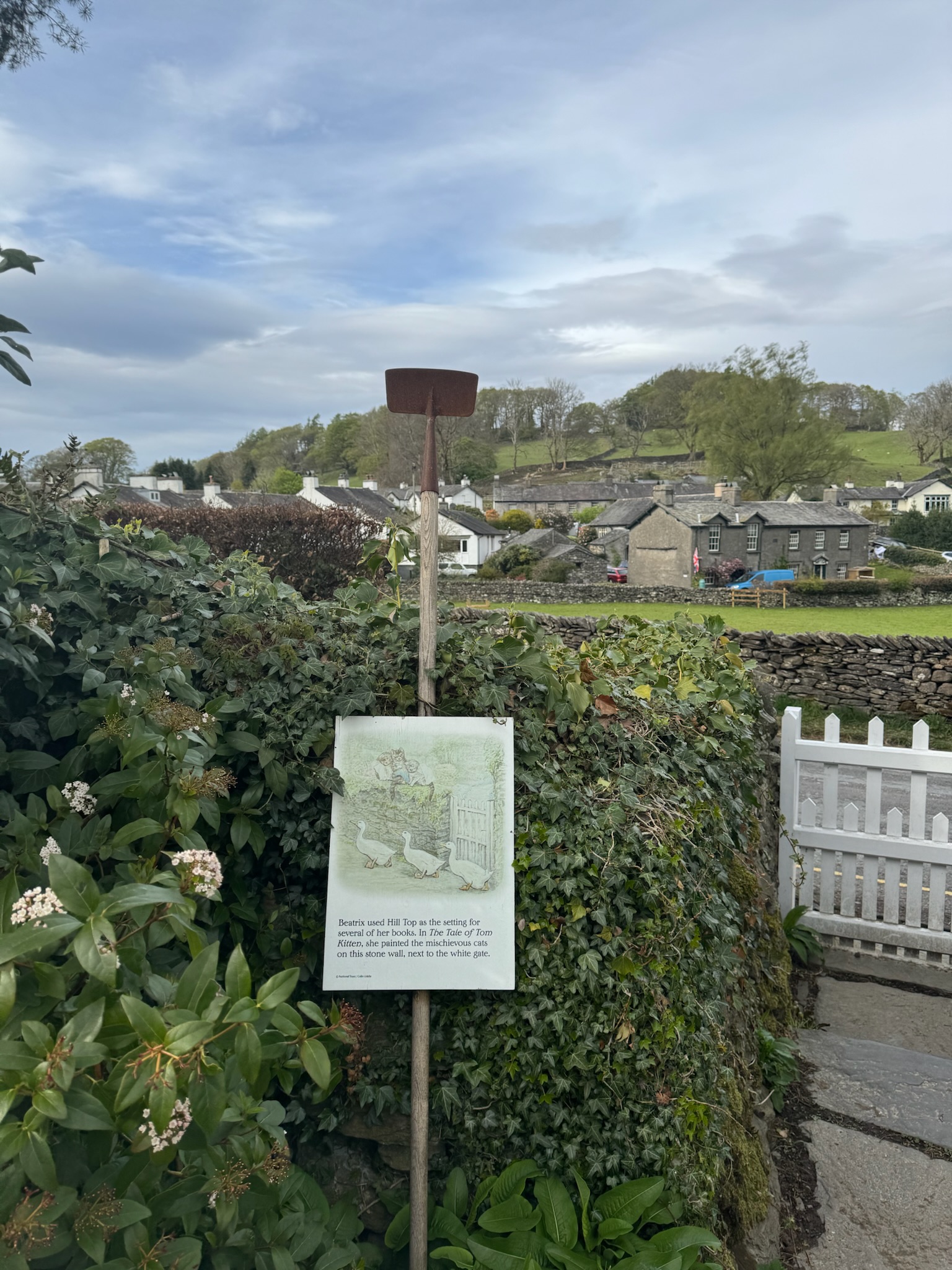
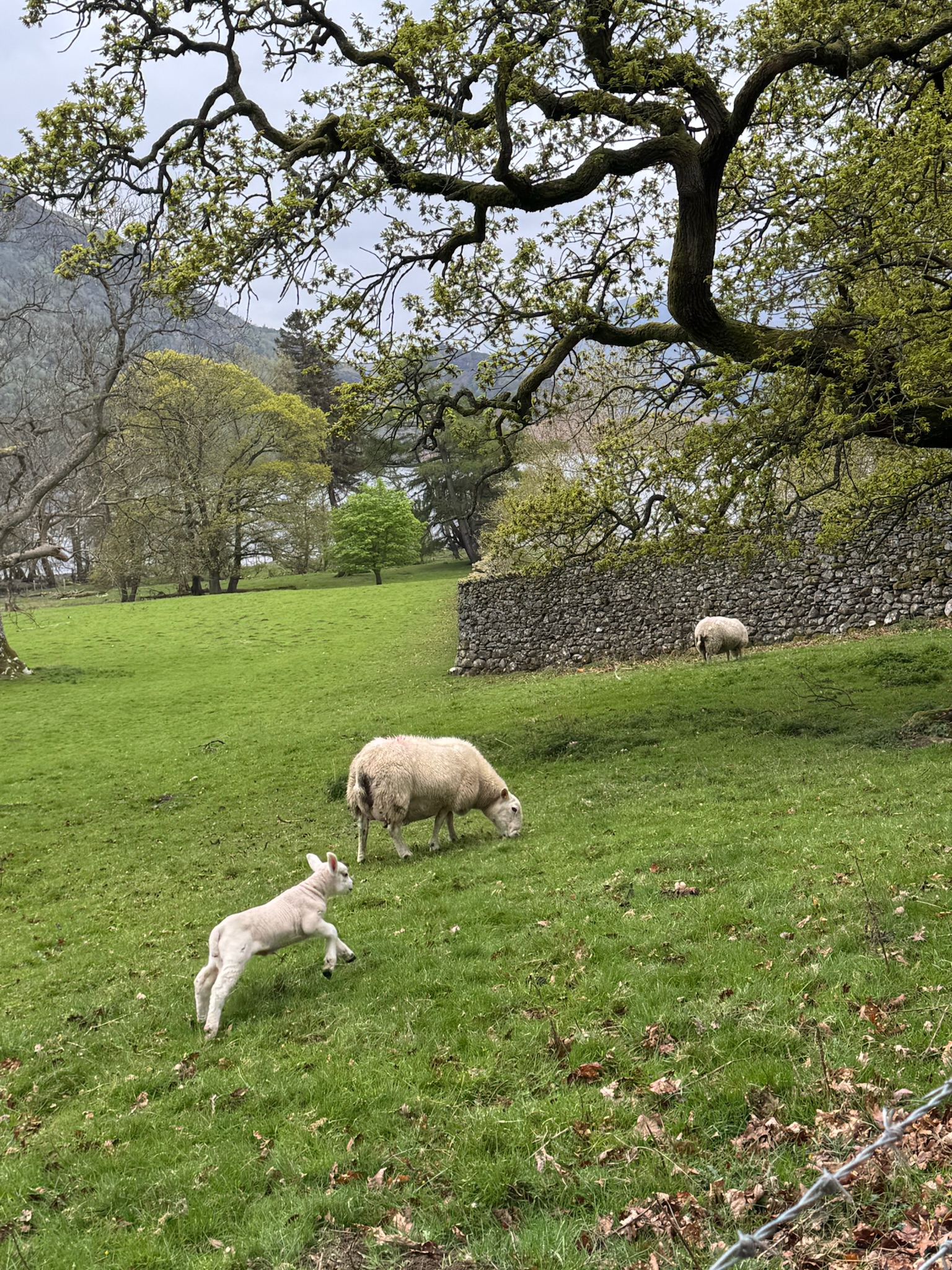
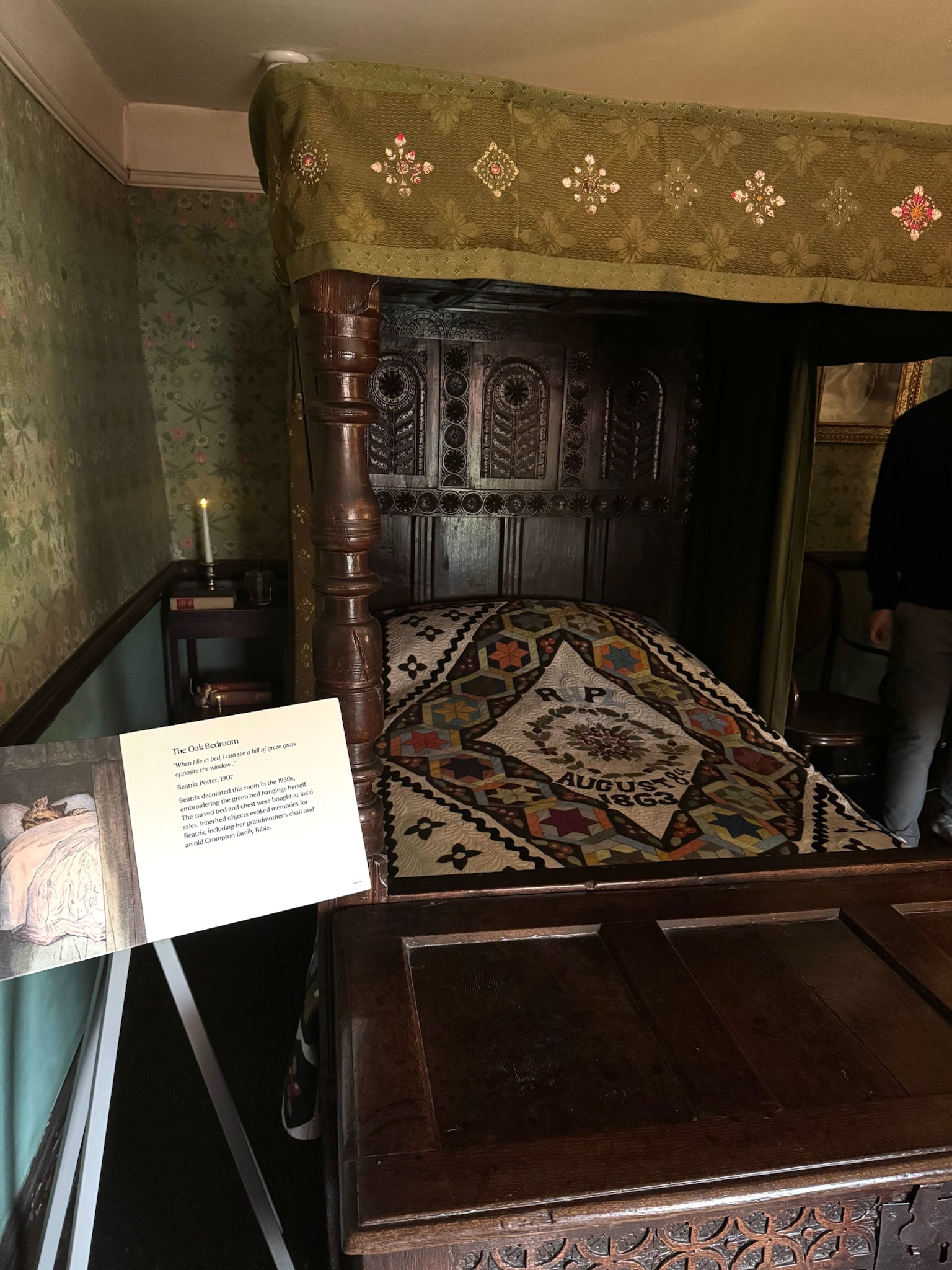
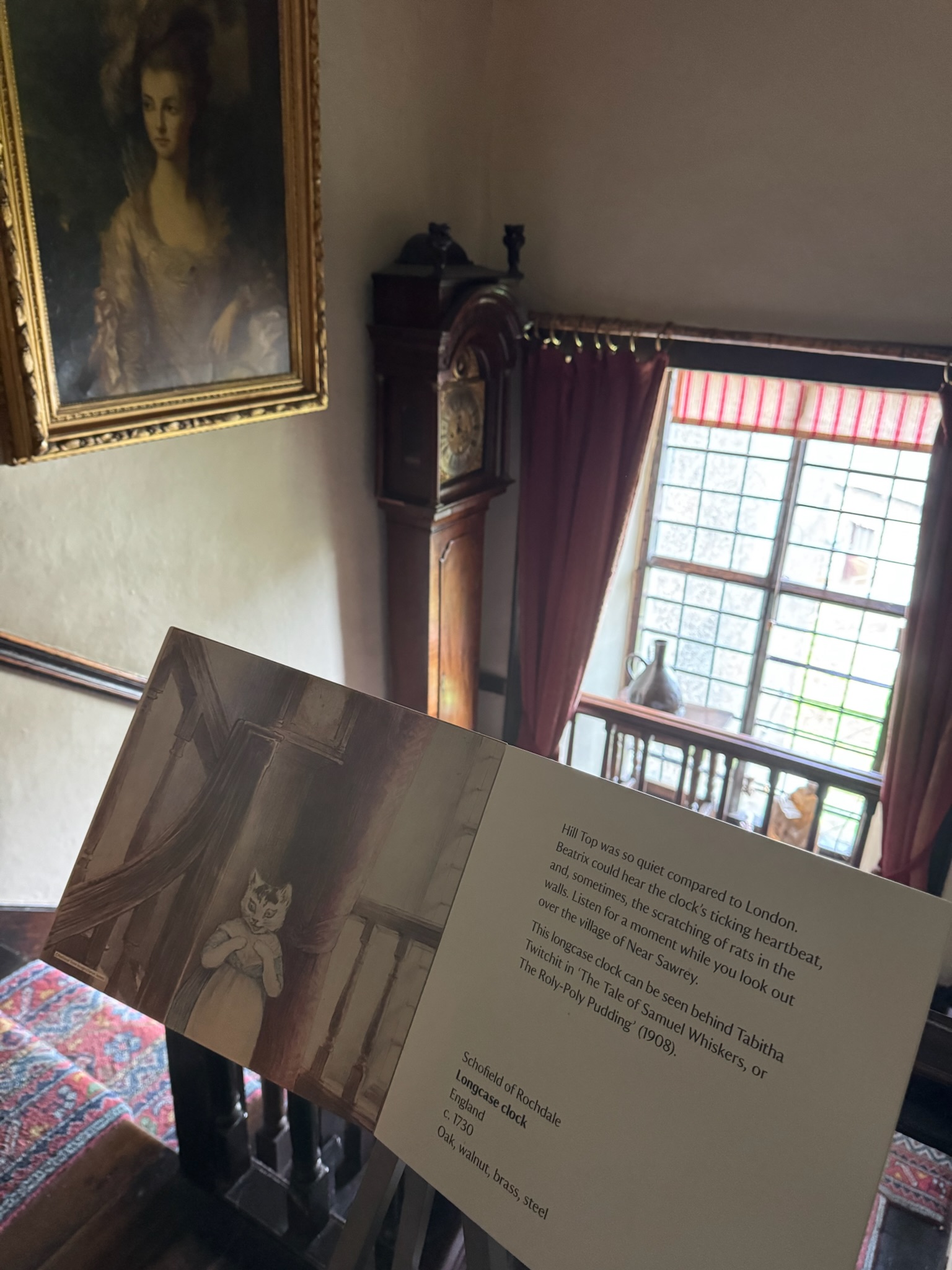
Scenes from Hill Top: the garden, the white gate and surrounding village, sheep in the Lake District landscape, and interiors that still feel closely connected to Potter’s books.
Beatrix Potter and the National Trust
‘I wish there may be a sufficient representative number of the old farms in the hands of the Trust.’
— Beatrix Potter in a letter to Eleanor Rawnsley, 1934
What I find most impressive about Beatrix Potter is that her legacy did not stop with the books. She did not only write about the countryside; she helped protect it.
Her relationship with the National Trust began through the Lake District and through her friendship with Canon Hardwicke Drummond Rawnsley, one of the Trust’s three co-founders. Potter first visited the Lake District as a child, and an early stay at Wray Castle brought her into contact with Rawnsley. Later, as she became more financially independent through the success of her books, she began buying land and farms in the Lakes.
This changed how I think about her. The “little books” can sometimes make Potter seem small-scale: rabbits, ducks, mice, kitchens, gardens, and cosy domestic scenes. But behind that was a much larger vision. She understood that the character of the Lake District depended not only on beautiful views, but also on working farms, local breeds, dry-stone walls, field patterns, and the continuity of rural life.
Potter worked closely with the National Trust to acquire land and manage farms for long-term preservation. She was especially committed to Herdwick sheep, a traditional Lake District breed, and became a respected breeder herself. This is a side of her that feels very different from the nursery image of Peter Rabbit: practical, strategic, and deeply serious about land management.
When she died in 1943, Potter left 4,000 acres of land and countryside, together with 14 farms, to the National Trust. This was not just a generous gift of property. It helped preserve a living landscape — farms, flocks, buildings, paths, and views — rather than a frozen postcard version of the Lakes.
I think this makes her connection to the National Trust especially meaningful. Many writers are remembered through houses, manuscripts, or museum displays. Potter is also remembered through land. The landscapes that shaped her imagination were protected, in part, because she used the success of her books to buy and safeguard them.
That makes her legacy feel unusually complete. She observed the countryside, turned it into stories, and then helped protect the real places behind those stories. For me, this is what makes Beatrix Potter much more than the creator of Peter Rabbit. She was also one of the people who helped ensure that parts of the Lake District could remain recognisably themselves.
Further reading
Enjoy Reading This Article?
Here are some more articles you might like to read next: