We visited Lyveden on 6 February 2026, on one of those rare sunny winter days that still felt properly chilly. It was not actually our original plan. We had meant to visit an English Heritage site, but only discovered at the gate that it would not reopen until early April. So we kept driving, a little further than expected, and eventually ended up at Lyveden — a National Trust site not too far from the house we used to live, but somehow one we had never visited before.
We started from the orchard field, although at this time of year there was not much of an orchard to see. The walk itself was more memorable than expected, mostly because of the mud. It was the thick, sticky kind of winter mud that seems determined to keep part of your boots every time you lift a foot. At several points I felt as if each step had sunk an inch into the ground. Still, the low winter light and open fields made the walk feel strangely satisfying, even if it was not exactly effortless.
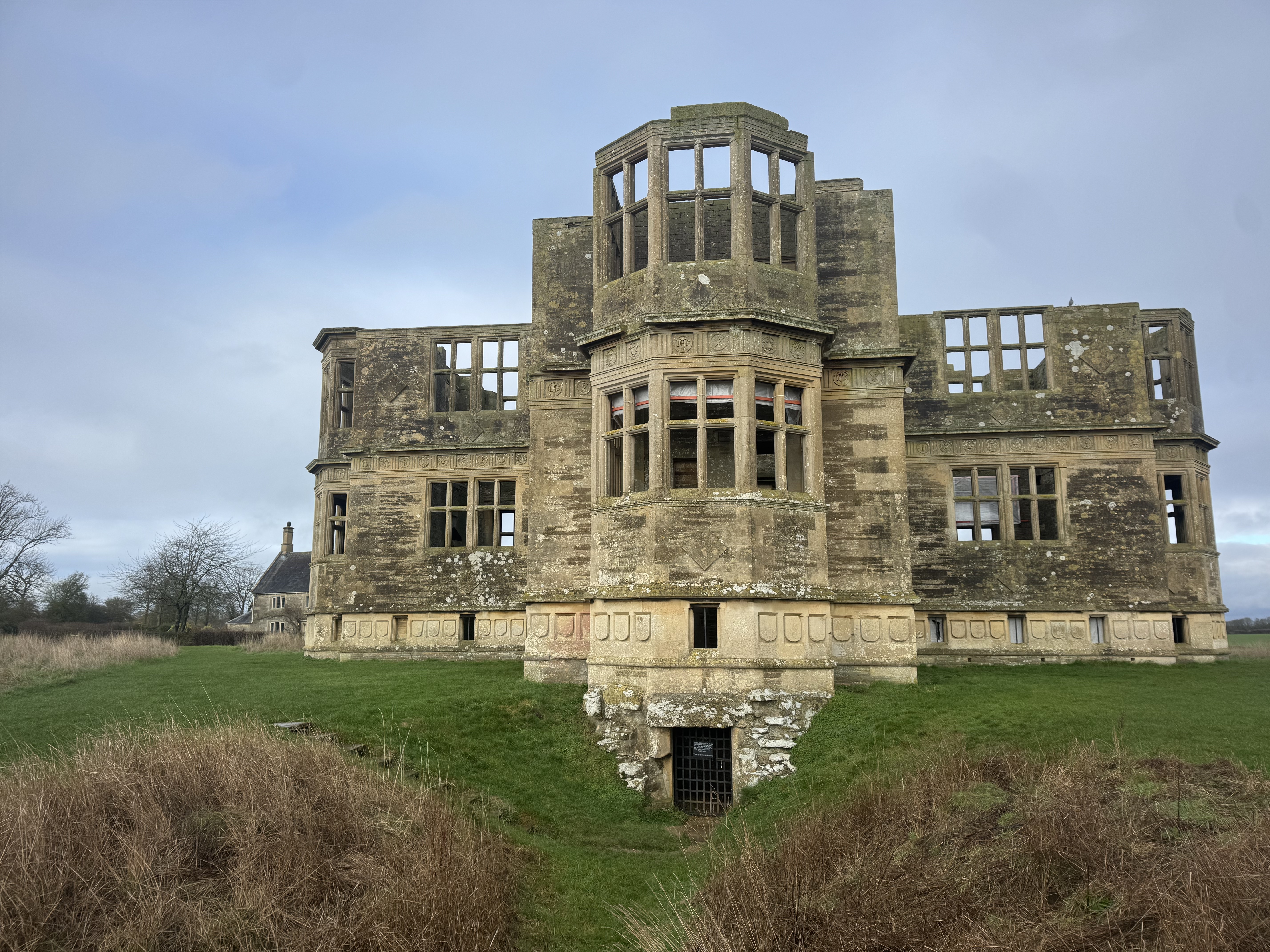
The unfinished Garden Lodge at Lyveden.
After the long muddy walk, the Garden Lodge finally appeared. It looks like a ruin at first, but it is really something more unusual: a building paused before completion. The lodge was commissioned by Sir Thomas Tresham, a Catholic landowner whose architecture often carried religious symbolism. Its plan is shaped like a Greek cross, and the whole building has a strong sense of symmetry and intention. But Tresham died in 1605, before the lodge was finished, and the project was left suspended. There is something moving about that — not simply because the building was unfinished, but because so much thought had clearly gone into something that never became fully usable. It made the place feel less like a ruin of decay, and more like a preserved interruption: a plan, an ambition, and a life suddenly stopped.
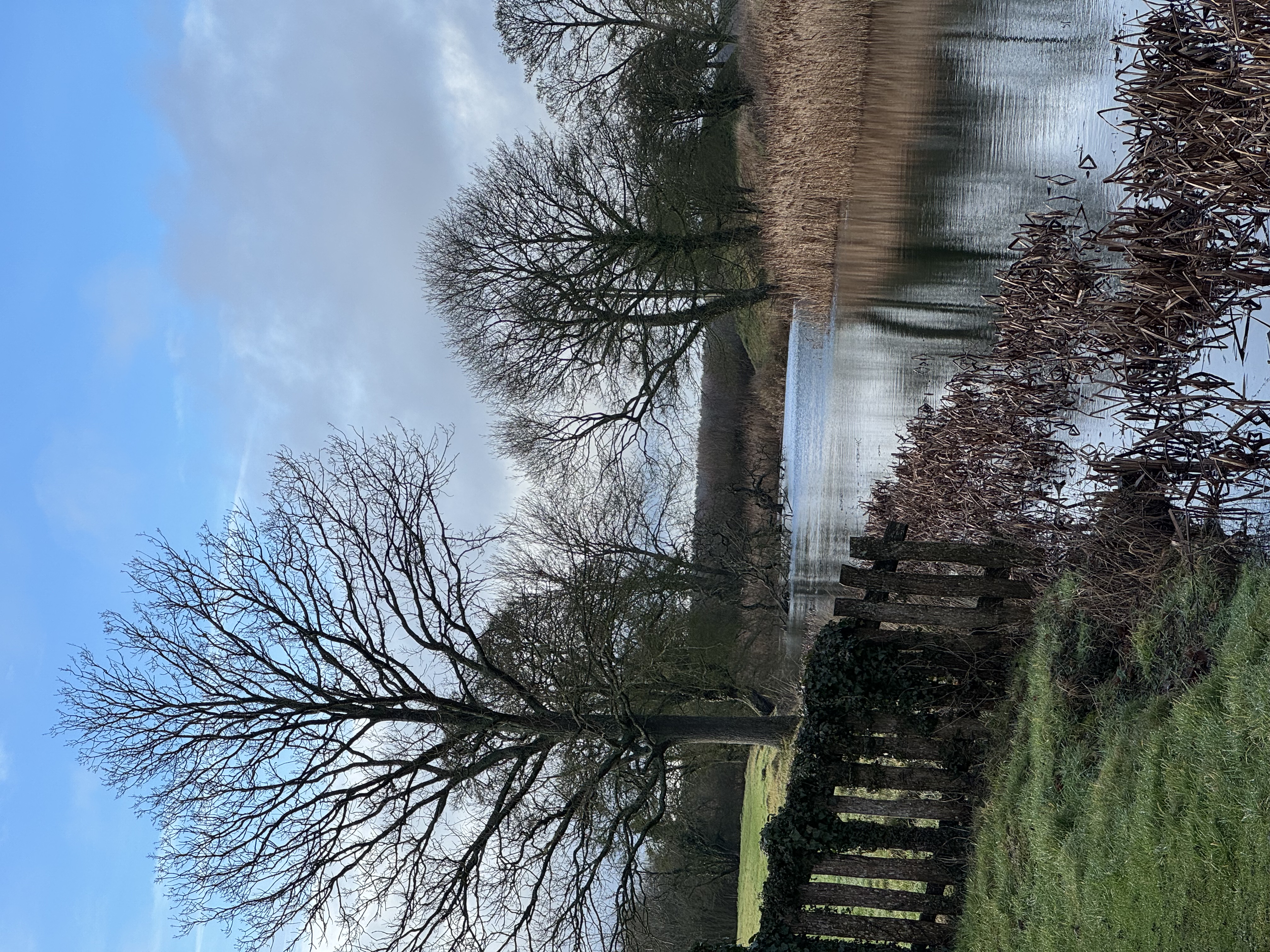
Winter light around the water and the landscape near the labyrinth.
The landscape around the lodge was also beautiful in a quiet way. Near the labyrinth and the water, the bare trees were reflected in the still surface, and the reeds gave the whole place a soft winter texture. It was not colourful in the way a spring or summer garden might be, but the openness, the pale blue sky, and the dark branches made it feel very calm. The view had that particular English winter atmosphere: cold, slightly bare, but unexpectedly clear.
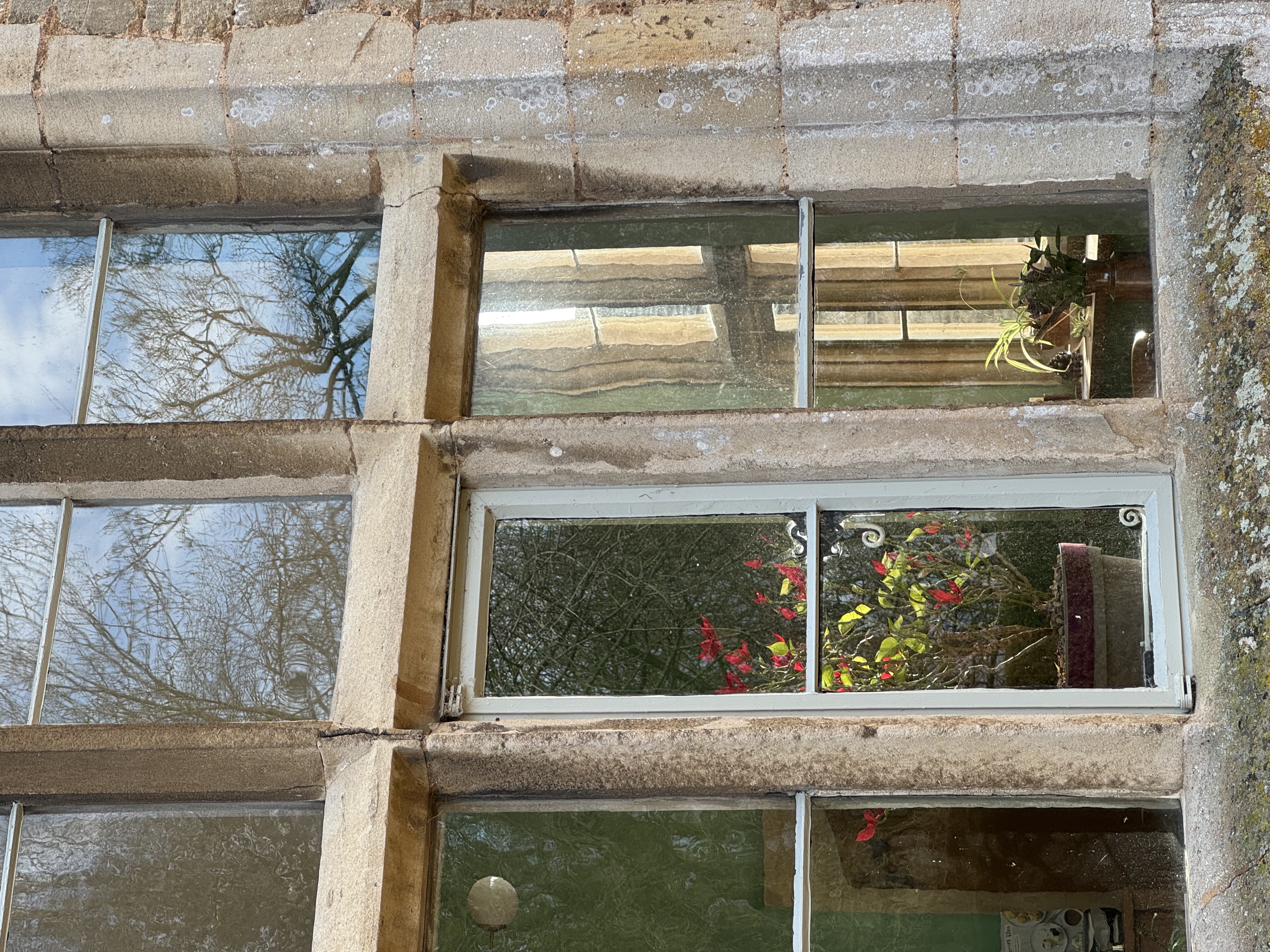
Inside the manor, with winter light and reflections through the old windows.
The manor was a lovely place to warm up afterwards. It felt clean, calm, and well organised. The ground floor had the café and some displays about the history of the site, while upstairs there was a living-room-like space with comfortable large sofas and board games. I especially liked the old windows, which framed and reflected the trees outside beautifully. After the muddy walk, sitting inside with those views felt like a very good ending to an unplanned visit. This was not the place we set out to visit, but perhaps that made it more memorable. Lyveden felt quiet, unfinished, and slightly unexpected — a winter detour that turned into a very good National Trust day.